|
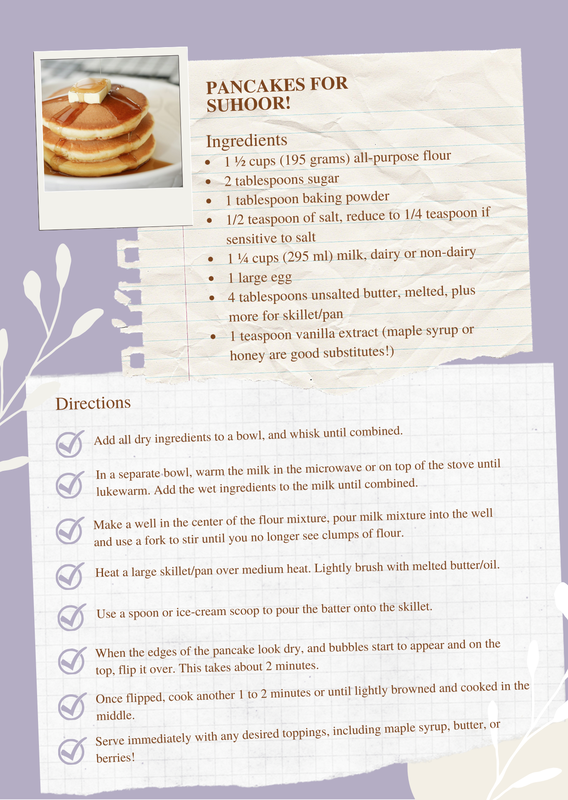
Ramadan Foods from Around the World Compiled and designed by Maryam Noor We asked our MSA members to share their Ramadan food traditions to see how different places around the world experience suhoor and iftar. We have compiled their responses and challenge you to spot the similarities between the cultural foods of different countries! Your browser does not support viewing this document. Click here to download the document. “My Mercy Prevails over My Wrath”: How the Way you Teach a Child about Allah SWT Impacts their Belief in Islam
Sadiah Bemat The first day of Ramadan has passed, and I, like many avid Yaqeen Institute watchers, began the month by watching Omar Suleiman’s Ramadan Series “Allah’s Names,” where the whole month, he will be delving into Allah SWT’s 99 names and explaining their meanings. At the beginning of every episode, we slowly watch a story unfold, where a young Gazan child who has fled the genocide is seeking safety and a new life with his uncle, while his mother and the rest of his loved ones are still stuck and being bombarded and displaced. Each new episode of this series will see the family’s story unfold, and how Allah SWT’s 99 names are invoked under every situation and circumstance, no matter how dire, showing the power of Allah SWT’s 99 names, and what they truly bring to the struggling Muslim. The first episode delves into the names Ar-Rahman (The Most Merciful), Ar-Raheem (The Especially Merciful), and Al-Raouf (The Tenderly Merciful), names that invoke and describe the mercy of Allah SWT upon His creation, humankind. I was blessed to be born into a religious family, and surrounded by Islam and the beauty of our faith, and it is one of my earliest memories as a child. I have early memories of my father praying Maghrib salah every day in our living room in an aim to set a good example for my siblings and me, and after I turned 7, he made me practice my Maghrib salah out loud for many months to ensure I learned correctly. I have memories of my mother getting dressed for dawats (gatherings) and asking me to help her match her hijab to her dress (I still do this with her). I remember being encouraged to go to the masjid from a young age, and this is where I began my Qur'an lessons, and also where I would go read Taraweeh prayer with my aunt every weekend, spending late nights playing with my friends after the salah was finished, exchanging candies and chocolates, and doing our mehndi (henna) once Eid was announced. All of this is to say that I had a very beautiful upbringing in learning Islam, but, while the adults in my life had encouraged and guided my Islamic practices from a place of love, they had grown up in a generation where they were taught to fear Allah SWT before being taught His mercy, and remnants of their childhood manifested in my education of Islam as well. This was not just my parents; it could also be seen in some of the practices my Molana and Alimah (may Allah SWT bless them) taught us about Allah SWT while I attended madressa (Islamic classes) from a young age. While I have always loved Allah SWT, I often remember being taught to fear Him first, and had this fear be the guiding principle of my actions, rather than my actions and deeds being influenced by intentions of seeking His love and mercy. See, there is a healthy dose of fear necessary in our faith of Allah SWT. But for a child, who you hope grows up to follow the path of Allah SWT, His remembrance, and steadfastness in His faith, being introduced to Islam through the punishment of the grave, the book of deeds where the Angels record your every actions, and the beast that is Jahannam (Hell) at the age of ten is terrifying. More often than not, you're pushing a person away from Islam, not because they don’t believe in Allah SWT, but because they are afraid of not living up to the standards placed by the Muslim community, or being “perfect” in their practice of Islam. While watching Omar Suleiman’s video, I thought to myself about how much his explanation would have helped me had I been taught about Ar-Rahman, Ar-Raheem, and Al-Raouf before I was taught about Allah SWT’s anger. How much easier it would have been for me as a child, how much pressure would have been alleviated from my young and impressionable mind, which did not understand the complexities of Islam. How much stronger my faith would have been if I had been taught about these when I was younger. How much sooner I would have turned to Allah SWT when I was struggling, rather than turn my back in shame. Shame. Shame. Shame. I was taught to be ashamed before I was taught to turn to Allah SWT, no matter what I had done. It was narrated by Abu Huraira RA that the Prophet Muhammad SAW said “When Allah SWT completed the creation, He wrote in His book with Him upon the Throne: Verily, My mercy prevails over my wrath” (Sahih al-Bukhari 3194, Sahih Muslim 2751). Allah SWT’s love, forgiveness and mercy come before His anger. That is what a child should be taught first about his Lord. Not how, if you commit a sin, you will be thrown into Jahanam and punished for eternity. In actuality, it is much more complicated than that, and there is a much more nuanced discussion and explanation that a child cannot comprehend about how a person goes to Jahannam. It is only for Allah SWT to know and decide if a person goes to Jahanam. As His creation, it is not for us to tell anyone, or fearmonger them into obeying with what will happen to them in the hereafter, whether they are a child or an adult, because that is not for us to know, and will only push a person away from Islam. Oh my inner child, how long it took to heal you. How much fear, anxiety, and shame had built and festered inside of you. It wasn’t until I was older, already finished with my madressa studies when I decided to learn Islam differently, and this time, learn it for myself, that I had truly realized who Allah SWT was, beyond what I had been conditioned to fear. I finally got the answers to my questions, and no longer had to digest the hollow line from adults, “because Allah SWT says so” when I asked why we are commanded to some action and prohibited from others. My curiosity to understand led me to finally understand that Allah SWT only commanded us to do certain actions, and abstain from others because we will benefit, or we will be protected. There are so many benefits for salah, but Allah SWT also tells us why, because it is a gift, where five times a day, while your head is in sujood (prostration), that is when you are closest to Him. Allah SWT has bestowed His mercy in salah, as it is a gift granted to humankind, where you get to speak to your Lord directly five times a day. Five times a day, you can turn to Him when your heart feels heavy, when you are overwhelmed with the dunya (life), and find peace. Allah SWT has bestowed mercy in even the preparation of salah, where every drop of wudu washes away your sins (Sahih Muslim 244). While we have the why for many things, there are some that we do not have answers for, but, just know that everything Allah SWT tells us, there is a good reason for it, and it is only in our benefit. That is the mercy of Allah SWT, because He only wants goodness for us, or to protect us from something that only He knows. Allah SWT is more merciful to you than your parents. He is more merciful to you than your closest companion. He is more merciful to you than a mother who gives everything to her child and receives nothing in return. If you turn to Allah SWT, He will run to you (Sahih al-Bukhari 7405). He is the Most Merciful. A story that exemplifies, and truly shows how merciful Allah SWT truly is, is the story of the Firoun (The Pharaoh) from the time of Musa AS (Moses). He was on the brink of death, and the angel Jibrael AS (Gabriel) came down, and in fear that Firoun would ask for forgiveness, after committing the worst sins, Jibreal AS kicked sand into his mouth because Jibreal knew, as the closest angel to Allah SWT, how merciful Allah SWT is, and that he would forgive Firoun if only he asked (Jami' at-Tirmidhi 3107). That is how merciful Allah SWT is. That is how loving He is, so why would He not forgive us if only we asked and tried to do better next time? Humans and Jinns were not made to be sinless. We are deeply flawed; we are deeply prone to commit sins. But Jannah (Heaven) is meant for those who repented, not those who did not sin. That is the mercy of Allah SWT. If you have not already, I recommend following this series and learn the beauty of Allah SWT through His 99 names with Omar Suleiman’s incredible explanation, and see how the story of the Gazan boy unfolds, reflecting on the privilege we have this Ramadan to seek food, spend time alongside our loved ones, and worship Allah SWT in safety and comfort. Castles of Worship
Raisa Farhin O son of Adam, how long will you remain chained between the needles of dusk and dawn? You’re caught in a trance, quenching your thirst with a mirage. Will you never awaken? When the hourglass is empty, will you lie wrapped in muslin, buried in sin? O son of Adam, why remain the devotee of a temple in your name? What is the purpose of worship that is driven by the hatred of your own being? You fawn after a siren’s echo, carving hollows you refuse to face. If only you released your fear of the sea, if only you swept away the shards, if only you pulverized the pedestal you’ve built, would you find the sweetness of turning within. The Dawn of Imaan
Raisa Farhin When the earth is cloaked with darkness, and the light within is called to rise, I seek my torch, but within the hollow, I find cinders in its place. The silent shadows suffocate my rooh, so I shackle my qalb within layers of plaster smothered across shards of imaan. If only these eyes could find dawn, and learn to rekindle the flame. If only this traveller would trust His decree, and let the springs tear apart each seam. If only this mind surrendered, and let His mercy split the stone within this chest. If only this soul would taste His words, and let them revive the tarnished embers. When will you unlock the chains, and let the mountains erode? Let the tides of His rahmah mend your wounds, Let the blessed rain revive the rivers within you, Let the nectar of His words melt the fears you store. And when the darkness cloaks the earth, may you accept the noor He lends, and let it shine through. MIA x MSA Women in Academia Panel: An Evening Full of Wisdom, Sisterhood, and Connection Maryam Noor In mid-January, Muslims in Academia (MIA) had their first event of the year in collaboration with the Muslim Students' Association (MSA). The purpose of this event was to bring together established Muslim women in academia for a panel discussion where they shared their academic journeys, experiences, and advice for younger Muslimahs navigating academia. The four panelists, Salma Sheikh, Alaa Hamid, Rayan Awad Alim, and Labiba Nawar, and moderator Bahja Farah (all pictured seated above), have studied and/or work at the University of Toronto in the fields of STEM, making their stories and experiences incredibly relevant to the attendees! For the first part of the event, the panelists responded to guided discussion prompts, with topics including how they experience being visibly Muslim, how they deal with the pressure to shrink parts of their identities in academic spaces, and how their faith empowers them in the face of challenges. This was followed by an open group discussion where the audience was handed mics to ask their burning questions. The atmosphere during the open discussion was incredibly supportive and reassuring, illustrating the power of sisterhood when it comes to building confidence in your identity! The event concluded with pizza and a networking session. The pizza was delicious, the conversations were thriving, and LinkedIn contacts were shared. I went around and asked some of the attendees for their key takeaways from the event. One girl responded, “Trust in your identity and don’t change yourself for the position you are in.” Another response was, “The Muslim experience isn’t as isolating as you think, and you’re guaranteed to find someone else with the same experiences if you explore your community.” A few people shared that they really valued the perspective of turning academia into an opportunity for ibadah (worship) by approaching their work with the right niyyah (intention). They also found reassurance through the perspective of how, just because you dedicate two years of your life to studying something, if you find you aren’t passionate about it, don’t feel obliged to see it through because, at the end of the day, you have decades of work life ahead of you. So, take those extra few years to pursue a career you’re actually passionate about! Overall, the Women in Academia panel provided a much-needed safe space for female Muslim students and academics to share their experiences and support each other as they each navigate their academic journeys. In sha Allah, we have more events similar to this one in the future!
Tuning Inwards and Outwards: Making the Most of Ramadan
Rumia Owaisi Ramadan is a month of tuning both inwards and outwards. A time where we collectively engage in spiritual growth and enhance our sense of community, all while working towards gaining personal closeness to Allah SWT. Balancing all these different pieces while being a university student can feel stressful! Fortunately for us, Ramadan is not about perfectionism, but about striving to do our best. Here are some examples of how to make the most of Ramadan this semester: Pause and Reflect Through Tafakkur As students, it is easy to live in the future. I mean, it is hard not to when you constantly have looming deadlines and one task after another. From this perspective, Ramadan can also seem like another fast-approaching deadline that we must be prepared for. However, this is where it is helpful to pause and take a deep breath. There is Divine Wisdom in you experiencing Ramadan as a student this year. Make the most of the opportunity by engaging in tafakkur, which refers to contemplation over the signs of Allah SWT and the wisdom in His creation of the world around us and within us. Engaging in tafakkur is a beautiful act of worship that can help bring mindfulness and presence into your life. Here are some guiding reflection questions:
Take a Relational Approach to Faith A lot of us struggle to feel a sense of connection when we are praying, making du’a, or reading the Qur’an. We crave a deeper emotional response to our prayer, but often get stuck in what feels like a more habitual cycle of worship. It can be tough to feel a sense of connection when we do not know who we are connecting with. Allah SWT created us as relational beings and introduced Himself to us through His Names so that we could get to know Him more deeply and closely. Reading about or watching a YouTube series on the Names of Allah SWT can be a way to develop our relationship with Him. Next time you are making a du’a, try to connect with the name most relevant to your situation. Similarly with the Qur’an, internalizing it as the words that Allah SWT is speaking to us directly can foster a more interactive experience. Allah SWT chose you to engage with His message. Sit with that, and reflect upon how you can level up your relationship with Allah SWT through the Qur’an this year. For example, while completing your recitation of the Qur’an in Ramadan, choose a handful of verses to reflect upon for that day. See what lessons you can take away and how you can apply them into your life. Remember What Your Soul is Housed in Our souls are housed within a material reality, namely, our bodies! Our bodies go through a lot during Ramadan. With fasting, our meal and sleep times shift. We may also be eating special foods that we otherwise do not get to enjoy so often. However, similar to how we are intentional about fasting and prayer, it is important to remember that Allah SWT has entrusted our bodies to us as an amanah (sacred trust). In this case, we can fulfill our amanah by taking care of our bodies, which will enhance the Ramadan experience. It can be easy to be overwhelmed with where to start with managing our health. Remember, small steps can give us big results. For example, eating slowly and mindfully prepares the body for digestion and allows nutrients to be extracted from your food in an optimal way. You will find yourself feeling more satisfied and energized after taking your time to eat. Also, do not forget the water! Keeping a water bottle to sip from while you are doing your school work post-iftar, or praying taraweeh can be a game-changer. Engage in Community Care Sometimes, the additional tasks that we have to do in Ramadan, like housework or hosting friends and family at our homes, can seem like distractions. However, serving others is a primary act of worship and medicine for the soul. Being intentional about our service brings barakah (blessings) into our lives and softens the heart. Think about some ways that you can engage in community care that will be meaningful for you. Here are a couple of examples:
May Allah SWT make this Ramadan a source of blessings and goodness for us all. Ameen! Frankenstein in Baghdad by Ahmed Saadawi – Book Review
Sadiah Bemat 3.5/5 Stars Ahmed Saadawi’s Frankenstein in Baghdad is a retelling of Mary Shelly’s Frankenstein, where readers are transported to the United States’ invasion of Iraq. The novel follows Hadi, a junk dealer, considered an oddball, who enjoys spending his days at the local cafe telling tales and stories. A close companion, Nahem, endures a violent death. Hadi spirals and begins to collect the body parts of people who die these sudden deaths in everyday bombings, and begins to stitch them together, becoming the reimagined Victor Frankenstein in Shelly’s classic story. His reason for doing so is simple: he wants the government to recognize the innocent civilians as people, and to give them a proper burial. Things begin to go awry when this amalgamation of Hadi’s collected and stolen limbs comes to life, whom he calls Whatsitsame, chases his own justice as he begins to enact revenge for the people whose limbs he is composed of, murdering their killers, and then beginning to kill anything in his path. Hadi’s creation of Whatsitsname challenged a common pattern within media coverage of devastating conflicts, genocides, and war zones, which is the dehumanization of innocent civilians who are killed. Similar to the realities during the US invasions of Iraq in 2002, the journalists in the novel document the daily tragedies and deaths of innocents, to the point that it is just a part of the daily existence of the characters. Hadi is pushed to his breaking point after his friend Nahem is killed. This profound loss pushes Hadi to his breaking point, and he begins to collect the limbs of the forgotten. Victim deaths are often quantified into numbers and statistics, removing individual stories and suffering, making observers detached, and perpetuating a notion of normalization of the tragic loss of lives. By collecting the limbs of the innocent, Hadi pushes to end this reduction of lives, and for the government to see each life as its own significant existence, not just faceless masses that fade and are forgotten. Saadawi’s reinterpretation makes us question who the real monster of this story is. Is it the Whatitsname, for enacting revenge, then delving into senseless killing? Is it Hadi for creating the creature in the first place, and avoiding Whatitsname altogether because of his immense fear towards the creation that he ‘fathered,’ as he calls it? Or, is it the political forces at play? In my interpretation, the creation of Whatsitsname is not a fearful and violent monster. Rather, he serves as a mirror of the various political forces that are involved in Iraq's destruction. The creature serves as a reflection of their crimes and their consequences, which is the death of Innocent Iraqi civilians, whose limbs he is created from. While I immensely enjoyed the novel, there were a few moments where I think the story lags. There is a huge list of characters, which is a list provided at the front of the book, but it was still difficult to keep track and made me less invested in some of the characters, creating this disconnect at some points of the story. One of my favourite aspects of the novel was the description of the setting and everyday life. Saadawi was masterful at placing readers within Iraq in 2002, showing how life for ordinary people was uprooted through violence, sudden losses, and showing the unstable conditions that people had to live through. At one point, we follow the soul of a man who goes home and sees his wife and infant child asleep, before any news of his death reaches them. These characters are all ordinary citizens who are living simple lives, but the invasion has made their ordinary lives unsafe, and unexpected tragedies have become expected and a normal part of everyday life. Something that I think was highlighted well was the coexistence of Muslims, Christians, and non-religious people, showing the diverse population of Iraq, rather than the dominant hegemonic view that is usually depicted. While Hadi is non-religious, his close friend Nehman was a devout Muslim, and had left a lasting memory within Hadi’s life, particularly when Nehman had glued the Throne Verse, also known as Ayat al-Kursi, from the Qur’an in the place they lived. This verse is one of the most powerful ones and is used for protection, so it made sense as to why Nehman glued it to make it difficult to remove. This reminds me of when I was younger and had issues with sleep paralysis and nightmares; my dad also taped this verse to my headboard, where it still resides to this day. There are moments when I laughed, and moments when I felt angry. For me, a novel where the characters make me care and feel deeply invested in their lives is automatically highly rated, so I recommend everyone to read this novel, whether you are a die-hard fan of Frankenstein, enjoy a good sci-fi book, or want an exploration of how individuals living in Iraq were impacted during the US invasions though a literary critique. The Cookie Chronicles 2: The Russian Chapter (русская глава)
Soundous Louardiane Zoyeb needed cookies. But not just any cookies. Russian-style cookies. Ahmad was organizing an MSAxIAW lecture event about the history of Islam in the Russian empire and Zoyeb thought it would be a good idea to have some small baked Russian treats for the attendees and the guest lecturer (who SAID YES!!) So, he headed over to the grandma’s legacy group chat and issued a call to find the next MSA Cookie Warrior. This brave soul would be baking alongside MSA Cookie Queen Ainaa, with whom he had previously discussed the matter. A few minutes later, Soundous responded saying that she might be able to contribute, but couldn’t confirm just yet. Following this, a barrage of puns on baking and Russian artistic culture rained down on the group chat. Zoyeb and Ahmad led the charge while Soundous pitched in occasionally. Some of their best work includes Ainaa Karenina (Anna Karenina), Recipes from Underground (Notes from Underground), The Sisters Caramelsov (The Brothers Karamazov), War and Treats (War and Peace), Baked Souls (Dead Souls), The Cooksacks (The Cossacks), What is to be Baked? (What is to be Done?), Baker of our Time (Hero of our Time), The Death of Ainaa Cookivych (The Death of Ivan Ilyich), Swan Bake (Swan Lake), and The Cookie Cracker (The Nutcracker). Later that night, Soundous went down a rabbit hole of looking up Russian desserts and this put her in a baking mood. She therefore decided to commit to baking for the event. She asked Zoyeb, the MSA’s resident Russian expert, if he had any suggestions for what would be good to make. Unfortunately, his expertise did not extend to the Russian art of cookery, so he asked his Russian professor and came back the next day with “Qurabiya,” which is essentially a butter cookie with jam. He provided Soundous with a recipe in Russian. Soundous cannot read Russian, but Google translate came to the rescue. While reading the ingredients, she noticed two interesting quirks. Instead of simply saying “egg whites,” the ingredients list specified chicken egg white (as opposed to ostrich eggs or quail eggs perhaps?) It also indicated the quantity of egg white needed in grams, as opposed to a number of eggs. For future reference, this narrator would like to make it known that 25 g of (chicken) egg whites is more or less equivalent to the white of 1 (chicken) egg. Meanwhile, Ainaa decided to try her hand at baking a Napoleon cake. Zoyeb warned her that his Russian professor had said that it was difficult and time-consuming to make, but he also added that if she were to try it, it would be one of her top 5 moments. Ainaa curiously asked what her top 4 moments were, but he never replied. This narrator will venture to say that winning the MSA Charity Week Bake-Off is one of them, but the rest will remain a mystery. A few days before the event, Soundous decided to do a test batch, mostly to see how many cookies the recipe could produce, since it failed to mention this rather important detail. She got all her baking supplies and ingredients ready, pulled out the translated recipe on her laptop, and feeling all pumped up and excited, she began. Two seconds later, she stopped. She had just read the first line of instructions: “Take the butter out of the refrigerator an hour or two in advance – let it become completely soft.” She looked at the unsoftened butter that she had just pulled out of the refrigerator 10 minutes ago and contemplated her options. She could either stop now and try again later, or she could carry on with her unsoftened butter. She stubbornly (and foolishly, this narrator might add) chose the second option, thinking that her hand mixer could speed up the process of making the butter soft and creamy. It did not. After fighting with the butter for about 10 minutes, she finally admitted defeat and left it to soften on its own for an hour. Let this be a lesson for all: read the full recipe before embarking on any cooking or baking activity. When Soundous later returned to the kitchen, she found the butter softened and thus began baking in earnest. Everything went smoothly until she reached the stage of forming the cookies into their cute little flower shape (which coincidentally looked like the TMV logo, as Kenda later pointed out). Her mom had given her a cookie press, but the instructions had gone missing somewhere and Soundous had no idea how to use the contraption. She set it up, put the cookie dough in, and proceeded to play around with the lever in an attempt to press the dough onto the baking sheet (this narrator is at a loss as to why she did not simply look up how to use the tool on the internet). She fought with the press (or the torture device, as she affectionately started calling it) for about 5 minutes before it finally occurred to her to find a demonstration video on YouTube. While she was away, her mom, who had been watching her struggle the whole time, decided to give it a try. Soundous happily returned to the baking (battle) field a few minutes later with her newly-acquired knowledge, only to find that her mom (an engineer) had completely dismantled the cookie press in her attempt to figure it out. The worst part is that she couldn’t reassemble it; one of the pieces simply wouldn’t go back to its original position. Soundous couldn’t even understand how her mom had managed to remove it in the first place. She tried to force it in for a while then gave up, leaving her mom to fend for herself. It took about half an hour, but her mom finally (one might even say miraculously) managed to fully reassemble the cookie press (alhamdullillah). But Soundous was yet again prevented from finishing up the cookies, as it was time for dinner. After getting some food into her belly, Soundous was ready to face the cookies once more. She knew how the cookie press was supposed to work in theory, but actually using it was a completely different story. She tried. And tried. And tried. The cookie dough was coming out in all sorts of ways, but after a while, she more or less got the hang of it and produced about 50 cute-looking cookies. Her second attempt the day before the event was far less chaotic. She learned from her mistakes and managed to produce about 120 cookies in a timely manner. Meanwhile, Ainaa was working on her Napoleon cake. She had decided to make a small one for the guest lecturer and an even smaller one for the event organizers. She found herself baking well into the night and finally finished at 2h30 AM. She topped the cake off with raspberries and thought it looked depressing. But after rearranging the raspberries a little and adding powdered sugar, she was satisfied with the end result (the powdered sugar ended up melting into nothingness on the raspberries, but the cake looked good nonetheless). She didn’t taste the Napoleon, but having tried both the puff pastry and custard cream that made it up, she logically concluded that, in theory, it should also taste good (this narrator can confirm that this was indeed the case). Later that morning, Ainaa got into the car with her brother to drive to the university. She was hoping that the cake would survive her brother’s driving. It did not. The raspberries went flying and the cake barely made it out in one piece. Once on campus, Ainaa balanced 5 IAW trifold posters under one arm while pulling a trolley containing the Napoleon cake with the other. As she made her way across the street, a sudden, strong gust of wind made her lose her grip and the posters flew off. In her rush to get them back, Ainaa abandoned the trolley with the cake on the road and they almost got run over by cars. After this near-death experience, Ainaa fixed the cake up a little and it looked as good as new. The red raspberry marks on the cake box walls were the only indicators that a massacre had occurred. The event went well, alhmadullillah! Ahmad’s hard organizational work and Zoyeb’s support paid off. More than 40 people attended the lecture, ma sha Allah. Even the weather contributed to creating an authentic Russian winter experience by delivering freezing cold temperatures and strong winds that day. The guest lecturer gave a wonderful talk and the attendees asked many good questions. Everyone enjoyed Soundous’ Qurabiya cookies, ma sha Allah. Many people praised their charming appearance and this made all the suffering she endured to shape them feel worthwhile. Ahmad’s mom later said that they were “very nice” and one person even asked if Soundous had a business and took baking orders! She took it as a beautiful compliment, despite Zoyeb’s claim that they wanted to know in order to call the Canadian Food Inspection Agency on her. Ainaa’s Napoleon cake was also a great success, ma sha Allah. The organizing team, after scrambling to acquire utensils (thank you to Safiyyah and Ainaa for getting them!) quite literally dug into the mini-version made for them and enjoyed it tremendously. The guest lecturer, who was very touched by the gesture, also loved her cake. She later wrote to Ahmad that “It is DELICIOUS!!!” (caps lock and all). And that’s how Cookie Queen Ainaa beat Napoleon and became the Empress of Cookies and Cakes. |