THE MUSLIM VOICE MAGAZINE
  • Home
  • PAST ISSUES
  • BLOG
  • Meet The Team
  • CONTACT US

Imprisonment

1/26/2024


Imprisonment
Written By: Zoyeb Ehsan

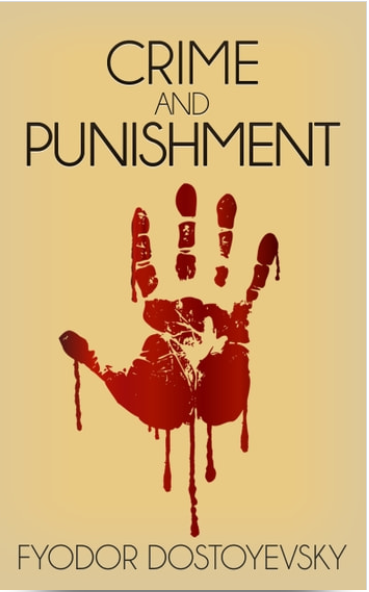
I’m sitting here now writing this article, after having just finished Fyodor Dostoyevsky’s Crime and Punishment. It’s a book that has affected me so deeply while reading it, more than any other novel has.

​
Though the plot of Crime and Punishment is interesting and has many surprises, I’d argue knowing its spoilers are not that detrimental to the enjoyment of reading it. Rather, the journey of Raskolnikov and his mind throughout its pages is where the novel really shines. That being said, I will spoil the book below in order to discuss my reflections on it, so reader’s discretion is advised!
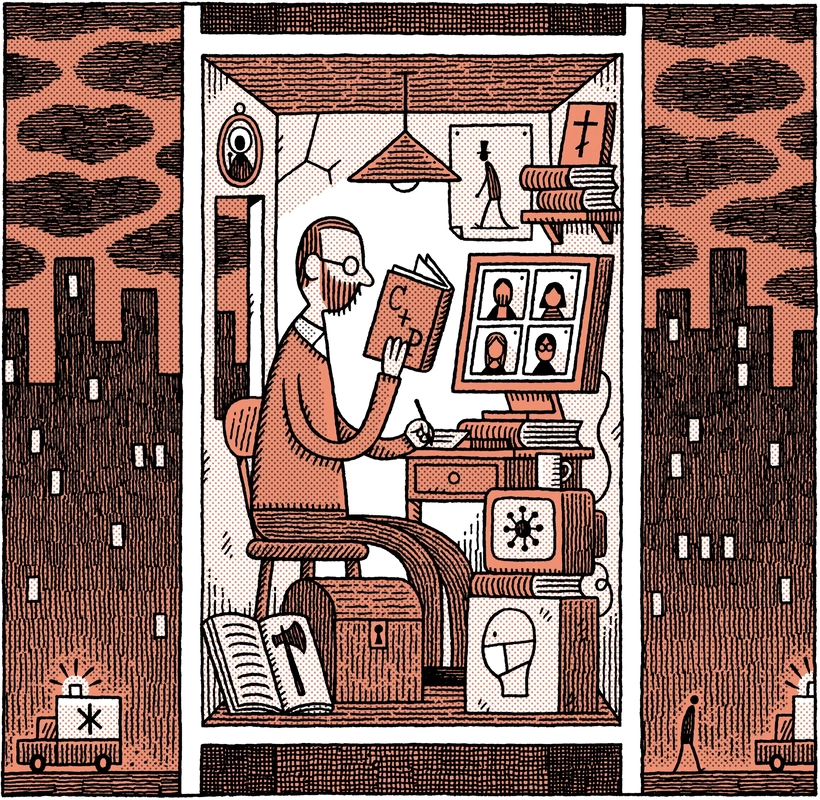
Raskolnikov, the main character, is a former law student who’s had to give up his studies due to a lack of means. He lives in oppressive conditions due to his poverty, and is separated from his family, who are also poor. However, he is a talented, intelligent writer, having previously written an article on his moral philosophy. Briefly, his philosophy is that people are separated into those that are extraordinary and those that are ordinary. The extraordinary, men like Napoleon, are permitted to step over the law and common morals when needed, whereas the ordinary would have to abide by these laws. It is through this philosophy that Raskolnikov kills and robs an old pawnbroker woman who he sees as a cancer in society. Killing her is justified in his mind, as the money he takes could be used for the betterment of himself and others. However, the book tracks Raskolnikov after this crime as he slowly drifts into insanity, not even being able to use the money he’s robbed. 
 
For me, this book’s plot was such a gut-wrenching, heartbreaking nightmare to read through—and it’s due to the clearly wasted potential of Raskolnikov. After committing the murder, Raskolnikov is still able to roam free and do as he pleases as the police have no clear evidence to convict him. Nevertheless, I argue that his surrounding circumstances and his terrible crime led to the imprisonment and torture of his mind anyways. For instance, one of the aspects I found particularly torturous, having put myself in the shoes of Raskolnikov, was viewing the life of his friend Razumikhin. Razumikhin, like Raskolnikov, is a young educated man struggling with finances. However, where Raskolnikov fell into sorrow and despair due to his impoverished conditions at the beginning of the story, Razumikhin appears as a beacon of friendliness and optimism. To me, he represents what Raskolnikov could have been. Rather than being crushed by his low position, Razumikhin seems to actively seek out opportunities to make money and seems to be an earnest man. He even takes care of Raskolnikov as he falls sick (due to his ensuing insanity) and later Raskolnikov’s family when they come to St. Petersburg to visit. He takes care of Raskolnikov’s mom and sister, who are very grateful, to the extent that Razumikhin seems more a part of the family than Raskolnikov. This is all the while Raskolnikov’s mom and sister still view Raskolnikov as their brilliant son and brother who’s suffering from some terrible sickness. 


To me, this was particularly heartbreaking as it must have dawned on Raskolnikov the life he’d given up when he committed that murder. Instead of having to hide out of shame from his own family and pretending that all was normal while it wasn’t, while his mom and sister still viewed him with love and adoration, he could have truly been the way his family envisioned him. He could have been the brother who his sister loved and admired, the son who was blessed with such brilliance and potential. Instead, deep down, he was a murderer, and there was no escaping that. And that is one of the fundamental messages of the novel, the fact that he was utterly unable to escape the guilt of his crime despite having his arrogant justifications for it.

​If his theory was correct, or if he really had been one of those great men he’d described in his article, he hypothetically should have been able to move on with the crime and even use it to his benefit, perhaps getting back into law school, getting a good career, and even helping his family. On the surface, it may even appear that the crime would have then led to a net positive.  He can’t so easily move on from this transgression, so his mind is consistently flogged by the memories and consequences of it throughout the book. This theme of tarnished potential appears especially close to the end of the novel when Raskolnikov is thinking of turning himself in. He starts to ponder the long sentence, the wasted years of the prime of his life, the state of his life when he’ll finally be free. It’s made all the worse when at the police station, as he’s about to confess, he’s greeted by a police official who praises him so highly for his intelligence that it feels almost like a mockery and a slap to the face at that point. This is the official to whom Raskolnikov eventually confesses.

It might be a personal thing, but failing to live up to one’s potential is one of the most terrifying things to me. It’s not just the act of coming up short, but having to live with the deep regret and sadness that your life could have been more. And as of this point, the book seems to have a quite sad turnout for Raskolnikov. He played with fire and got burnt. And this may seem silly but this book really made me feel the weight and wrongness of crime and grave transgressions like Raskolnikov committed. It made me feel the despair of disappointing family and friends, the people who love you the most. It made me feel the guilt of not achieving my potential, instead trading it away for a sin done in arrogance and heedlessness. We have one life to live in this dunya (world). We can either live it beautifully and honorably such that we self-actualize, or we can waste it away, forcing us to only dream of what we could have been.

The epilogue however feels markedly different from the depressing tone of the rest of the book. It follows Raskolnikov, now in Siberia, serving out his prison sentence. Due to the circumstances of his crime and confession, he was sentenced to only 8 years. Despite living in harsh conditions and being literally imprisoned, we get the sense by the end that Raskolnikov’s mind is starting to become a bit free. I have not mentioned her but an important character, Sonia, had pledged to stay by Raskolnikov’s side, albeit on the outside, throughout his entire prison sentence. And her influence is what ultimately saves him in the end. Sonia is a sinner herself but is also devoutly and ardently religious, something Raskolnikov would mock in the past. In prison however, Raskolnikov finally comes to appreciate Sonia, her feelings and beliefs, and what she represents. And we are left with an optimistic view of what his life may be like once he leaves those prison walls.

To conclude, this novel made me reflect on aspects of my relationship with Allah SWT and this dunya. For me, Raskolnikov represents a case-study of what happens to a person when they diverge from Allah SWT to a great extent. Even with all his intelligence, what resulted from it? His arrogance led to a complete waste of it! Of course, the epilogue redeems his character a bit and leaves on an optimistic note as he will only be imprisoned for 8 years. But still, that is 8 years of his life gone behind prison walls. As I grow older, the sense of life being so short really does become more apparent. We don’t have a second to lose on this earth, which is why it’s so important to stay firm on the Straight Path. With Allah’s SWT guidance, we can learn to make the most of all the blessings that He bestows on us and in turn lead lives truly worth living.

Comments are closed.

    Archives

    November 2025
    October 2025
    December 2024
    April 2024
    March 2024
    February 2024
    January 2024
    December 2023
    November 2023
    March 2023
    January 2023
    December 2022
    November 2022
    October 2021

    Categories

    All
    Personal Essay
    Poetry
    Recipes
    Reviews

Powered by Create your own unique website with customizable templates.
  • Home
  • PAST ISSUES
  • BLOG
  • Meet The Team
  • CONTACT US